How to Whiten Your Teeth?
How to Whiten Your Teeth: Safe and Effective Ways to Achieve a Brighter Smile
Have you noticed your teeth looking a little yellow or stained? You’re not alone! Over time, our teeth can lose their natural brightness due to everyday habits, ageing and certain foods and drinks.
The good news is that there are several ways to brighten your smile. But with so many whitening products and home remedies available, how do you know which ones actually work?
At Happy Smiles Dentist Hornsby, we believe a brighter smile starts with healthy teeth. Let’s explore what causes tooth discolouration, the different whitening options available and how to achieve a whiter smile safely.
Why Do Teeth Become Yellow or Stained?
Before choosing a whitening treatment, it’s helpful to understand why teeth change colour.
Some common causes include:
- Coffee and tea: Regular consumption can leave stains on the tooth surface.
- Red wine: Dark pigments can gradually discolour teeth.
- Smoking and tobacco: Nicotine and tar can cause stubborn yellow or brown stains.
- Ageing: As we get older, tooth enamel can become thinner, allowing the naturally yellow dentine underneath to show through.
- Poor oral hygiene: Plaque and tartar buildup can make teeth appear dull or discoloured.
- Certain medications or dental conditions: Some stains develop inside the tooth and may not respond well to conventional whitening.
Understanding the cause of discolouration helps determine the most suitable treatment.
1. Professional Teeth Whitening at the Dentist
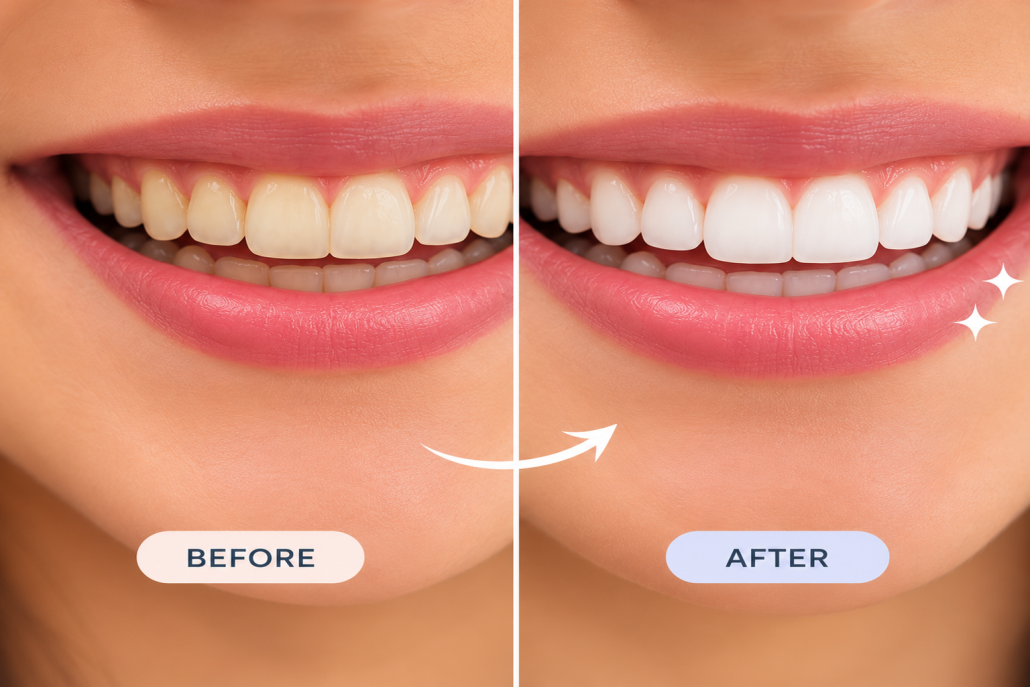
If you’re looking for a noticeable improvement in your smile, professional teeth whitening may be an option. Achieve a brighter smile in just one visit! Professional in-chair teeth whitening typically takes around 60–90 minutes. Dentist-supervised whitening uses specially formulated whitening agents to break down stains and lighten the natural colour of your teeth.
Benefits of professional teeth whitening may include:
- More noticeable results than many over-the-counter products.
- Treatment tailored to your teeth and oral health.
- Professional guidance to help minimise sensitivity.
- Advice on maintaining your results.
Before whitening, your dentist will check your teeth and gums to make sure the treatment is suitable for you.
Remember: Whitening results vary depending on the type of staining, your natural tooth colour and your oral health.
2. Take-Home Whitening Kits
Dentist-provided take-home whitening kits can be a convenient option for people who prefer to whiten their teeth gradually.
These kits may include custom-fitted trays and professional whitening gel, along with instructions on how and when to use them.
Unlike some store-bought products, dentist-supervised kits can be tailored to your individual needs.
It’s important to follow your dentist’s instructions carefully to avoid unnecessary tooth sensitivity or gum irritation.
3. Whitening Toothpaste: Does It Really Work?
Whitening toothpaste is one of the easiest and most affordable ways to help maintain a brighter smile.
Most whitening toothpastes work by removing surface stains caused by foods and drinks.
However, there’s something important to know:
Whitening toothpaste generally removes surface stains rather than changing the natural colour of your teeth.
For everyday care, choose a fluoride toothpaste and brush gently twice a day with a soft-bristled toothbrush.
Avoid excessive brushing or highly abrasive products, as these may wear down enamel over time.
4. Do Home Remedies Actually Whiten Teeth?
You may have seen online whitening trends involving lemon juice, baking soda, charcoal or other household ingredients.
But are they safe?
Lemon juice and other acidic substances
Acidic ingredients can damage tooth enamel. Once enamel is lost, it cannot naturally grow back.
Activated charcoal
There is limited reliable evidence that charcoal toothpaste safely and effectively whitens teeth. Some products may also be abrasive.
Baking soda
Baking soda can help remove some surface stains, but using homemade mixtures or scrubbing aggressively is not recommended.
Our advice: Avoid experimenting with DIY whitening treatments. Speak with your dentist before trying a new whitening method.
5. Can a Professional Dental Clean Make Your Teeth Whiter?
Sometimes, your teeth may not need whitening at all!
A professional scale and clean can remove plaque, tartar and some surface stains, helping your teeth look cleaner and brighter.
While a dental clean won’t change the natural colour of your teeth, it can make a noticeable difference if staining or buildup is the main concern.
It’s also a great opportunity for your dentist to check your overall oral health.
6. How to Keep Your Teeth Whiter for Longer
Whether you’ve had whitening treatment or simply want to prevent staining, a few everyday habits can help.
- Brush twice daily with fluoride toothpaste.
- Clean between your teeth every day using floss or interdental brushes.
- Rinse your mouth with water after coffee, tea or other staining drinks.
- Avoid smoking and tobacco products.
- Attend regular dental check-ups and professional cleans as recommended.
- Follow your dentist’s aftercare instructions if you’ve had whitening treatment.
Remember, teeth whitening isn’t permanent. Results can gradually fade, particularly if you regularly consume staining foods and drinks.
7. Is Teeth Whitening Suitable for Everyone?
Teeth whitening isn’t necessarily suitable for every person.
Before starting treatment, it’s important to consider a few things:
- Sensitive teeth: Whitening may temporarily increase sensitivity.
- Tooth decay or gum problems: These should be assessed and managed before whitening.
- Crowns, veneers and fillings: Whitening products do not change the colour of existing dental restorations.
- Pregnancy or breastfeeding: Whitening is generally best postponed due to limited safety evidence.
- Children and teenagers: Whitening requires particular caution and professional assessment.
If you’re unsure whether whitening is right for you, your dentist can help you explore suitable options.
Frequently Asked Questions About Teeth Whitening
Does teeth whitening hurt?
Some people experience temporary tooth sensitivity or gum irritation during or after whitening. Your dentist can recommend ways to help manage these effects.
How long does teeth whitening last?
Results vary from person to person. Depending on your oral hygiene, diet and lifestyle, whitening effects may last several months or longer.
Can yellow teeth become white again?
Many types of yellowing and staining can improve with whitening treatment. However, results depend on the underlying cause, and not all discolouration responds to whitening.
Will teeth whitening damage my enamel?
When used appropriately under professional guidance, teeth whitening is generally considered safe for suitable patients. However, overuse or incorrect application can cause sensitivity and irritation.
Can I whiten my crowns or veneers?
No. Whitening products work on natural teeth and do not lighten crowns, veneers or tooth-coloured fillings. Your dentist can discuss alternatives if their colour no longer matches your smile.
Ready for a Brighter Smile?
A brighter smile can help you feel more confident, but healthy teeth and gums should always come first.
Whether you’re concerned about staining, yellow teeth or simply want to explore your options, the team at Happy Smiles Dentist Hornsby is here to help.
We can assess your oral health, discuss the possible causes of discolouration and recommend suitable options for your smile.
Contact Happy Smiles Dentist Hornsby today to book a dental consultation and take the first step towards a healthier, brighter smile!
Recommended SEO details
| Element | Recommendation |
|---|---|
| SEO title |